Hardwood flooring installation in Potomac, MD begins under the boards. We flatten and dry the subfloor, let the wood acclimate in your house, then nail it off straight and finish every doorway. Potomac Carpets works out of Potomac, MD across Montgomery County.
Subfloor flattened and moisture tested
Wood acclimated before it goes down
Reducers, nosing, and vents fitted
Get a Hardwood Installation Quote
Tell us the rooms, what is down now, and the species and width you like.
Prefer to call? +1 240 751 5542
What We Nail Down Before the First Board
Species, grade, and width
Grade describes the character you get, not the quality. Select oak reads calm; a rustic grade brings knots and color swing.
Subfloor condition
We screw off squeaks, replace soft panels, and take a straightedge to every room. High spots get sanded, low spots filled.
Moisture on both sides
We meter the plywood and the wood itself. Boards that go down wetter or drier than the house will gap or cup later.
Direction and start line
We snap the first line off the longest sight line, not off a wall that is out of square, and run boards across the joists.
Where the wood ends
The Stair Landing Tells You Who Laid the Floor
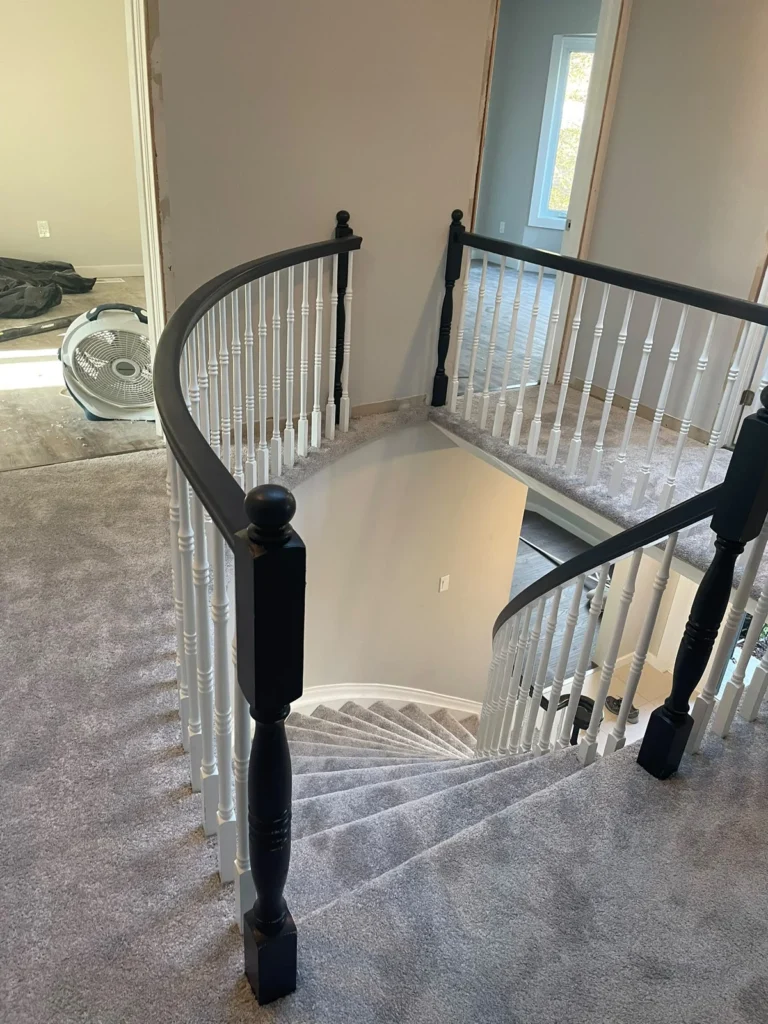
A hardwood job is judged at the edges. We set the finished height at the top of the stairs first, so the stair nosing sits flush with the plank instead of standing over it. Where the wood meets a carpeted tread or a runner, we hold the reducer tight and keep the last board full width rather than a sliver. Curved and winder treads get scribed by hand. Ask us to walk your stairs before you order.
We compare species, grade, and width against your rooms, your light, and how much color variation you want.
2
Fix the subfloor
We pull the old floor, screw down squeaks, replace soft panels, and flatten with sanding or self-leveller.
3
Let the wood settle
Boxes sit open in the room until the boards match your indoor humidity. We meter them before we start.
4
Nail off and trim out
We snap the start line, blind-nail each row, then fit reducers, stair nosing, vents, and shoe molding.
Choices That Change How It Looks
Width sets the mood
Two and a quarter inch strip reads traditional and busy. Five inch plank calms a big room and needs tighter humidity control.
Grade sets the character
A select grade gives you even color and few knots. Rustic grades bring mineral streaks and knots, and cost less per foot.
The subfloor sets the method
Plywood over a crawl space takes nails. A slab does not, so that room moves to glue-down or an engineered product.
In Our Customers' Words
Reviews shared with us directly by Potomac Carpets customers.
★★★★★
5/5
Potomac Carpets did an excellent job from start to finish. The team was professional, punctual, and helped us choose the perfect carpet for our home. The installation looks fantastic!
★★★★★
5/5
Great service and quality workmanship. The installers were friendly, efficient, and left everything clean when they finished. I highly recommend Potomac Carpets.
★★★★★
5/5
We had a wonderful experience with Potomac Carpets. They offered a great selection, answered all our questions, and completed the installation on time. Our new flooring looks beautiful.
★★★★★
5/5
Professional, reliable, and easy to work with. The entire process was smooth, and the finished result exceeded our expectations. We would definitely use Potomac Carpets again.
Species, grade, and width change the whole room
Pick the species for hardness and color, then pick the grade for character. Grade is not a quality ranking. A select grade gives you even tone and almost no knots. A character or rustic grade brings mineral streak, knots, and a wider color swing, and it costs less. Neither is better; they just make different rooms.
Width does more than you would guess. Two and a quarter inch strip flooring looks busy and traditional. A five inch plank quiets a large room down, but wide boards move more across a Maryland summer, so we watch humidity harder. If a slab or a basement is in the picture, engineered hardwood flooring handles those conditions better than solid plank.
The subfloor decides the method
We pull the old floor before we finalize anything. Then we walk it with a straightedge, screw off every squeak, replace soft or water-damaged panels, and sand down the ridges at the seams. Low spots get filled. A floor that is out of flat telegraphs through wood for the next thirty years.
We also meter moisture in the subfloor and in the boards. If the two are far apart, the wood goes in the room and waits. That acclimation costs a few days and saves you gaps in February. Boards run across the joists, and we snap the start line off the longest sight line, not off a wall that is out of square.
Stairs, vents, and where the wood stops
The edges are what people notice. Stair nosing has to sit flush with the plank, not proud of it. Flush-mount vents get cut from the same run so the grain lines up. Where wood meets carpet, we set both finished heights together and fit a reducer that nobody stubs a toe on. Cabinets, islands, and the toe kick get planned before the boards reach them.
Across the floor joists is the structural rule, and it usually matches the longest sight line anyway. In a hallway we run with the length of the hall. We snap a chalk line off that sight line rather than off a wall that is out of square.
Does the wood really need to acclimate?
Yes. Wood takes on and gives up moisture with the air around it. Boards installed straight off a cold truck shrink and gap through the first winter. We open the boxes in your rooms and meter the wood before we lay a single course.
Can I put solid hardwood on a concrete slab?
Not by nailing it. Solid plank wants a wood subfloor and fasteners. On a slab we either build up a plywood subfloor, which raises your doors, or we switch you to an engineered plank that can be glued down.
How do you handle color variation?
We work out of several boxes at once and lay the boards out in front of us before nailing, so light and dark spread evenly across the room. Natural wood still varies. That is the material, not a defect.
Compare Wood & Flooring Services
Engineered Hardwood Flooring in Potomac, MD
Engineered hardwood flooring in Potomac, MD gives you a real wood surface that handles a Maryland summer better than solid plank.